Visit the Vasa Museum
in Stockholm
- Most visited in Scandinavia
- Open year-round
- View current availability
- Ticket delivered immediately after validation
- Mobile ticket accepted
- Non-refundable ticket under the listed conditions
Discover the Vasa, the only preserved warship from the 17th century in near-original condition. This jewel of the Swedish royal fleet sank in 1628 on its maiden voyage. An exceptional historical immersion in Stockholm.
Ticket options
Prices and conditions

Vasa Museum & Vrak - Museum of Wrecks: Entry Ticket + Audio Guide
From 32,45 €.
Experience the world's best-preserved 17th-century warship in all its glory.

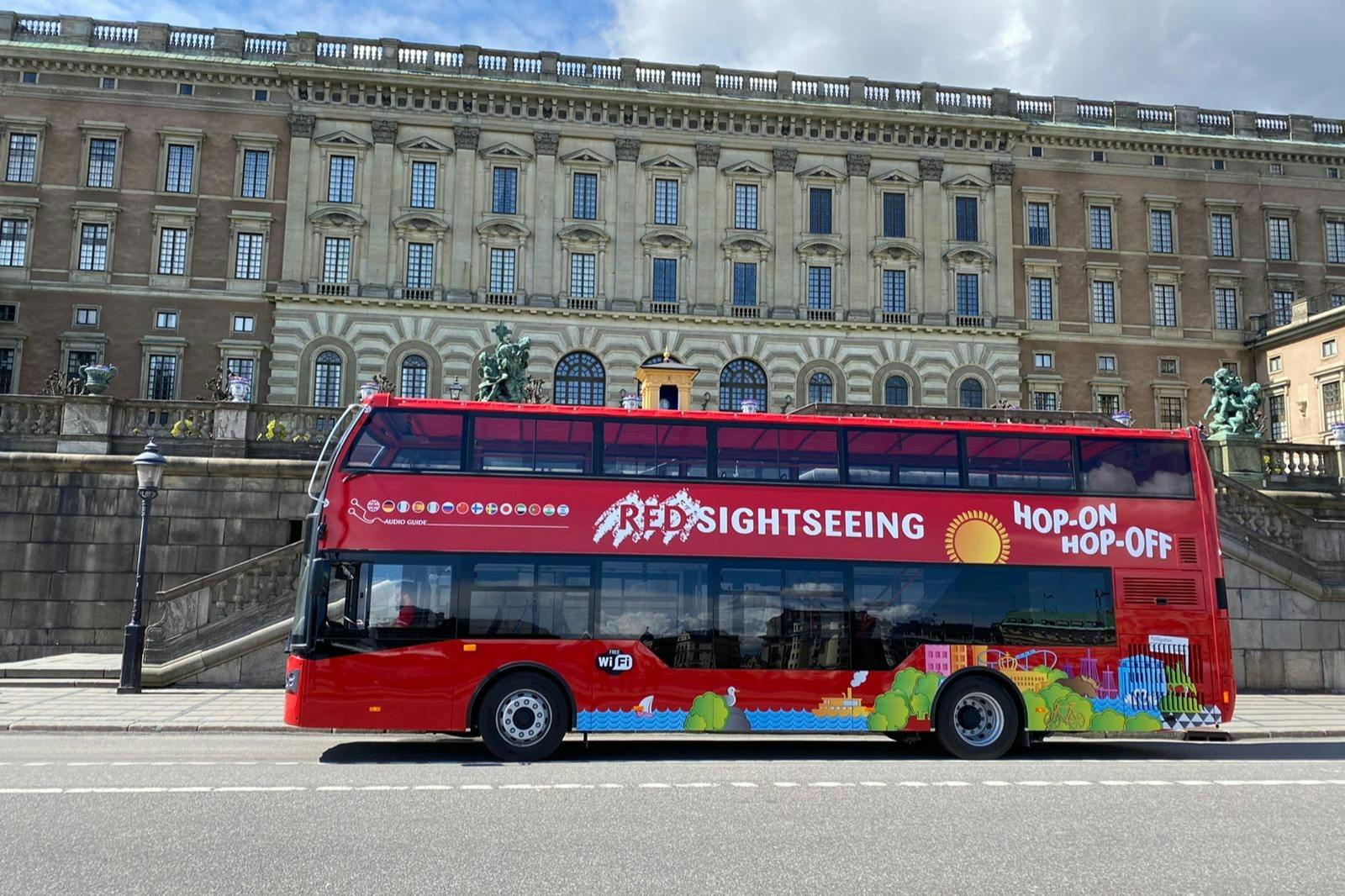
Red Sightseeing Stockholm: Hop-on Hop-off Bus + Vasa & Vrak Museums Entry
From 51,50 €.
View historical artifacts and learn about maritime archaeology.

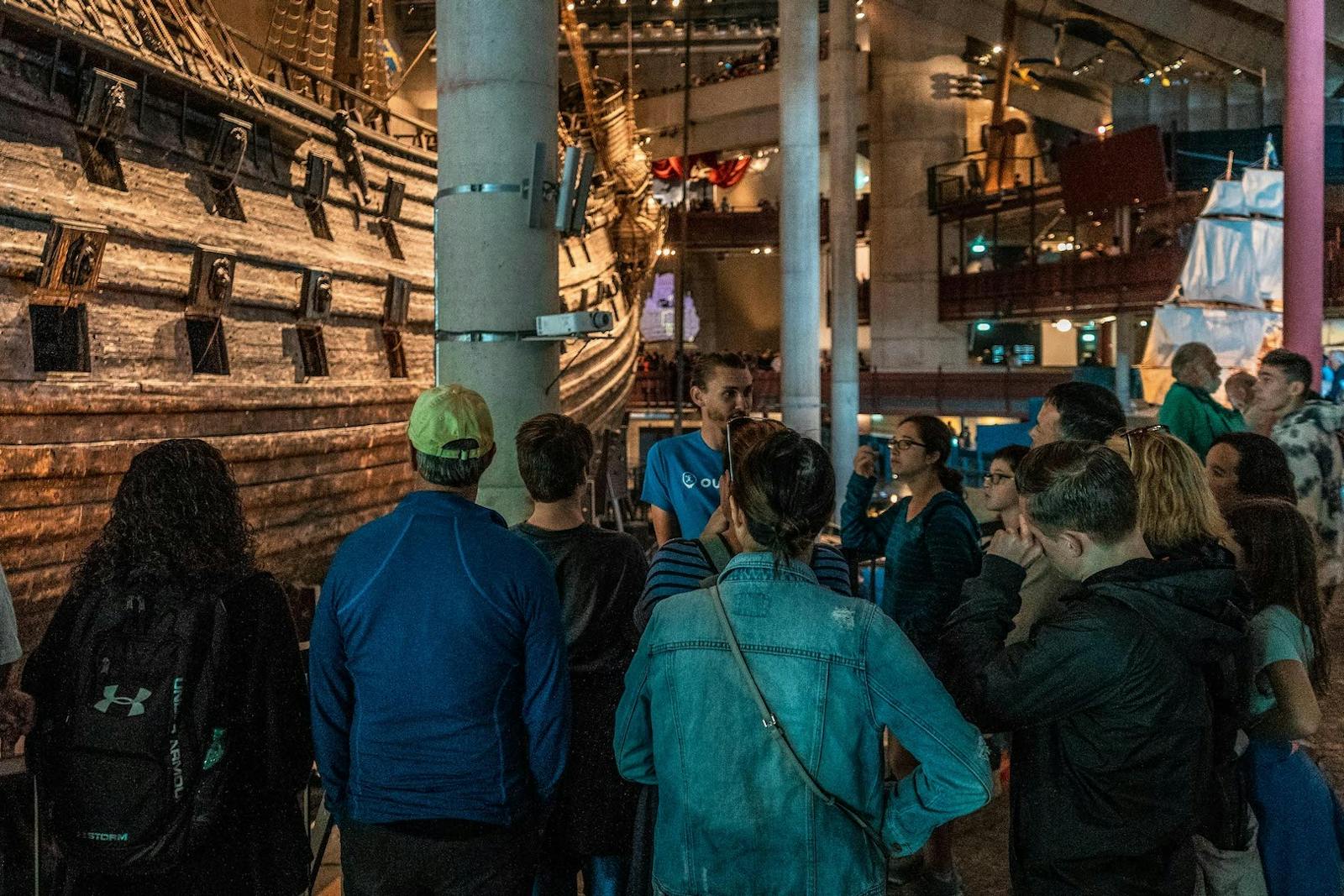
Promenade dans la vieille ville de Stockholm + Musée Vasa
From 95,50 €.
Accès au Musée Vasa et promenade guidée dans la vieille ville.
What visitors say
Thousands of visitors have already booked their visit: reviews and testimonials
★ 4.6/5 · 12 reviews collected directly from visitors and moderated by Visit Tickets
"We visited the Vasa Museum as a family and the kids absolutely loved the interactive models. The intro film is essential to understand the 1628 sinking. A truly unique immersive experience in Stockholm."
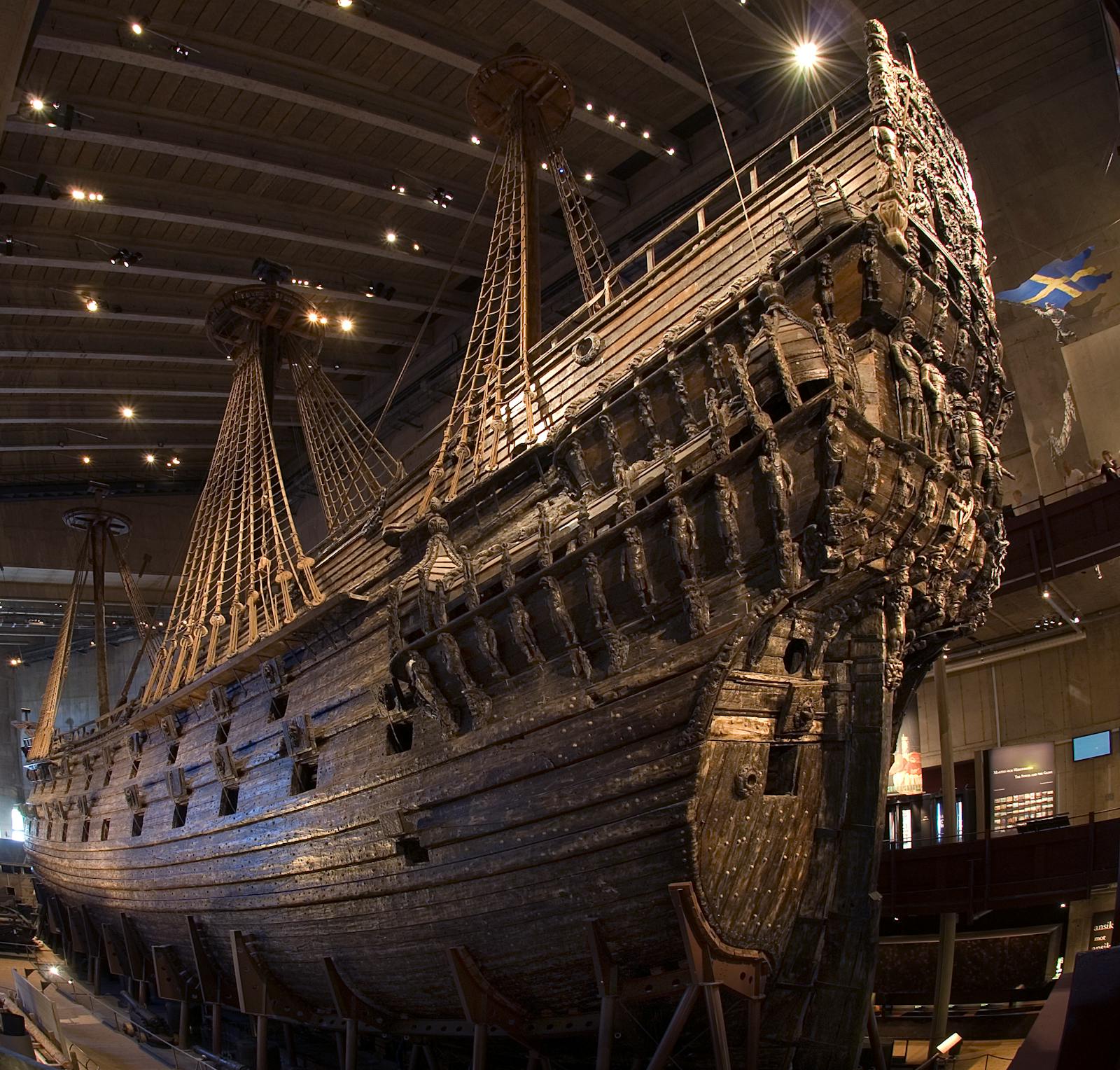
"I was moved by the view of the massive oak keel on the lower level. The architecture with its copper roof and stylized masts is iconic. We bought our tickets online to skip the line, great advice."
"The exhibit on restoration with polyethylene glycol is fascinating. I found the museum a bit chilly (18°C) for summer, but the tour of the 6 levels is worth it. The Vasa ship is stunning in its detail."
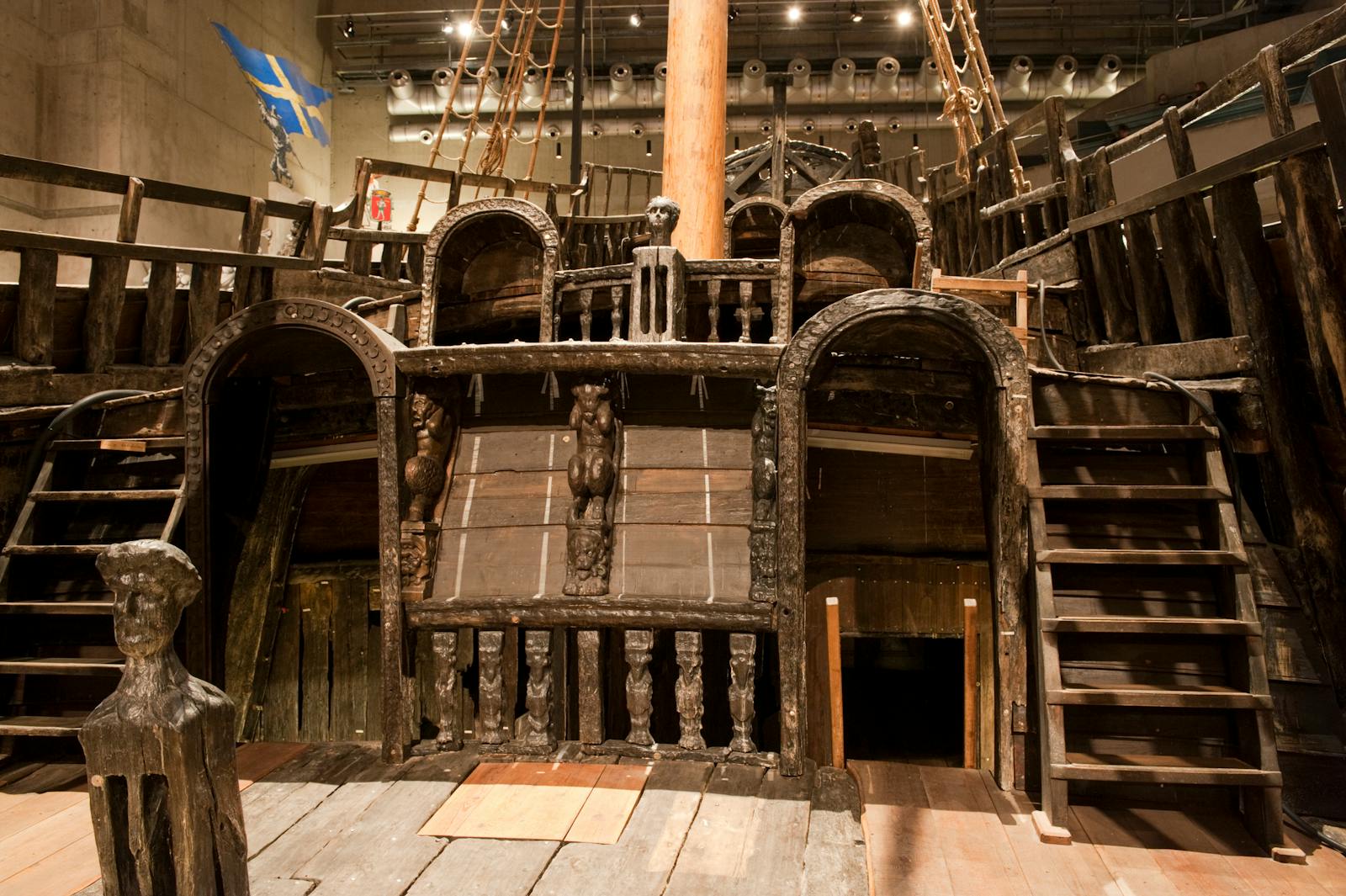
"Solo, I really enjoyed the quietness of the first hours. The sterncastle with its 700 sculptures is a masterpiece. The view of the 64-cannon warship from the different levels is spectacular."
"A big fan of the 4 other museum ships like the Sankt Erik. The museum is well accessible with elevators everywhere. We loved learning about Gustav II Adolf and the 17th-century context."
"The price of 32.45 € is a bit steep, but justified by the quality. The queue at the entrance was long even with a pre-purchased ticket. The 20-minute intro film sets the tone perfectly."
"As a couple, we spent an hour admiring the mythological sculptures in wood. The atmosphere is respectful and immersive. The on-site restaurant is convenient for a lunch break after the visit."
"The seniors among us were delighted by the clear explanations about the 1961 raising. The panels are well done. We did well to book online to avoid the typical cruise crowd."
"A bit disappointed by the heat others mentioned; for us it was the opposite. The ship is beautiful, especially the detail of the 64 cannons. The museum roof faithfully replicates the rigged silhouette of the Vasa, very photogenic."
"Total immersion with the view of the keel on the lower level and sculptures up to the top. The story of the 1628 maiden voyage sinking makes it all more poignant. A must-see in Djurgården."
"We visited the adjacent floating ships like the Finngrundet, which is a bonus. The main museum is vast, don't miss the 6 levels. The ambiance is calm and conducive to historical reflection."
"The wait at the entrance lasted 20 minutes despite the ticket, a pity. But the construction context under Gustav II Adolf is well presented. The cool interior is something to expect, even on sunny days."
Practical info
Everything you need to plan your visit
Address
115 21 Stockholm, Sweden
Stockholms län
Djurgården Island · Tram: Vasa Stop (Lines 7, 9, 11) or Bus 44. Easy access from City.
Opening Hours
Wed : 10:00 - 20:00
Thu - Sun : 10:00 - 17:00
Hours vary by season and school holidays. Always check the official website before visiting, especially in winter.
Pricing
Red Sightseeing Stockholm: Hop-on Hop-off Bus + Vasa & Vrak Museums Entry : From 51,50 €
Promenade dans la vieille ville de Stockholm + Musée Vasa : From 95,50 €
Show more ▾
Children under 4 free. Reduced rates for students and seniors. .
Visit Duration
Photos
Audience
Accessibility
PMR
The museum is fully accessible to wheelchair users with elevators and ramps.
Family
Ideal for families, with interactive exhibits and models for children.
Audio guide
French, English, Spanish
Weather in Stockholm
Current conditions and forecast to plan your visit
Discover Vasa Museum
The Vasa: Symbol of Swedish resilience
From its sinking in 1628 to its salvage in 1961, an extraordinary story.
1628
Year of inaugural sinking
1961
Successful salvage
25 million
Visitors since 1990
64 cannons
Firepower of the ship
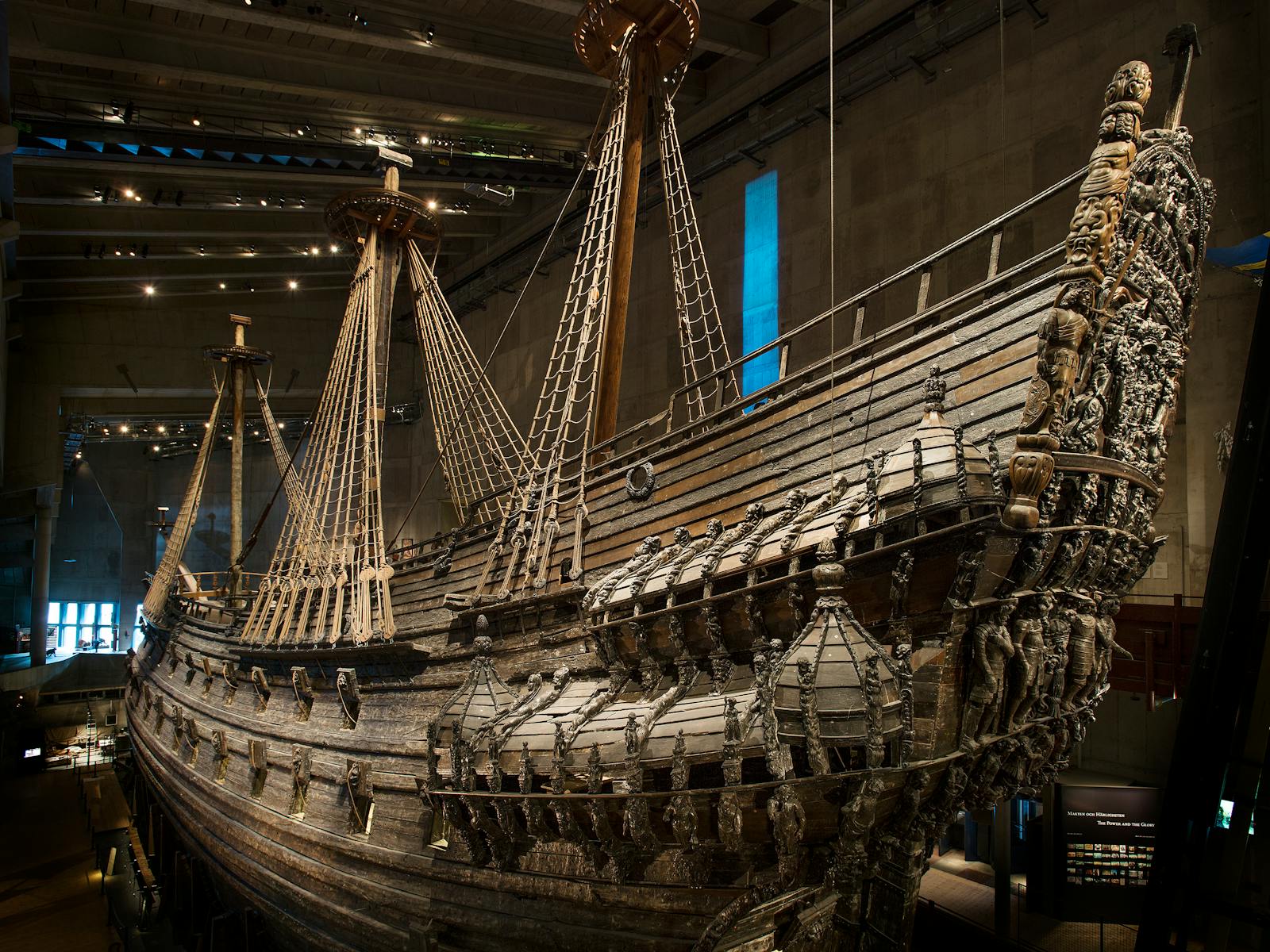
The Vasa Museum in Stockholm houses the only 17th-century warship almost entirely intact ever recovered. Sunk on its maiden voyage in 1628, this 64-gun vessel was salvaged in 1961 after more than three centuries on the seabed. This maritime museum is today the most visited in Scandinavia, offering a unique immersion into Swedish history.
History of the Vasa and its sinking
Built under the order of Gustavus Adolphus, the Vasa was intended to be the most imposing ship in the Swedish fleet. However, upon departure on August 10, 1628, a light breeze was enough to capsize it. The ship sank only 20 minutes after departure, taking with it approximately 30 lives. This tragic event remains one of the most famous shipwrecks in maritime history.
The ship remained at the bottom of the harbor for more than 330 years, preserved by the cold water and the absence of wood-boring organisms. It was not until 1961 that a team of divers successfully salvaged it. This titanic operation, led by Anders Franzén, allowed the recovery of the hull and a large part of the armament. The Vasa thus became an exceptional testimony to 17th-century naval architecture.
After its salvage, the ship required extensive restoration. It spent 27 years in a temporary structure called Wasavarvet, where it was treated with polyethylene glycol to stabilize the wood. This innovative method allowed water to be replaced by a polymer, preventing the decomposition of the wood once out of the water. The result is a nearly intact ship, ready to be exhibited to the public.
What to see at the Vasa Museum?
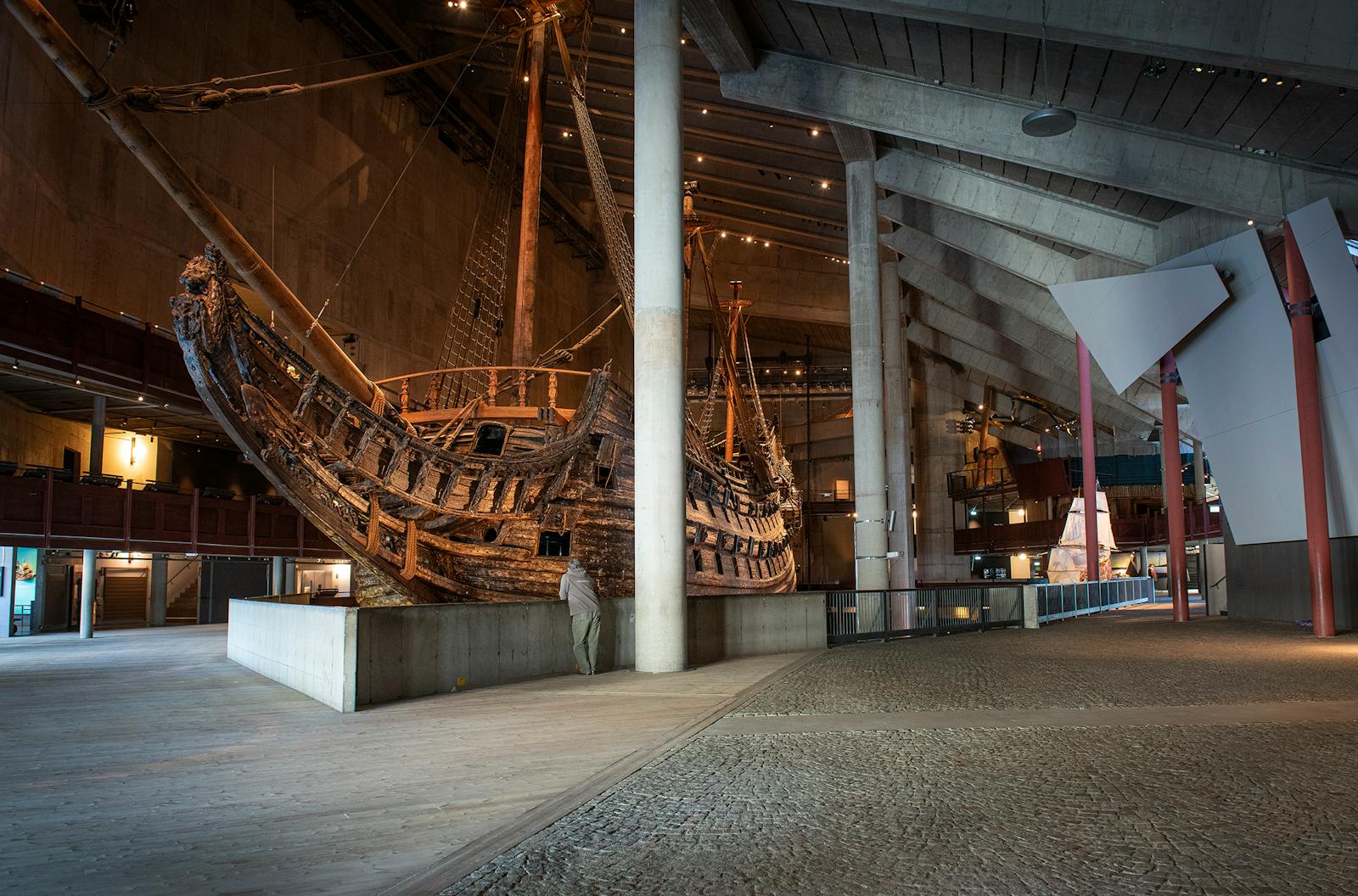
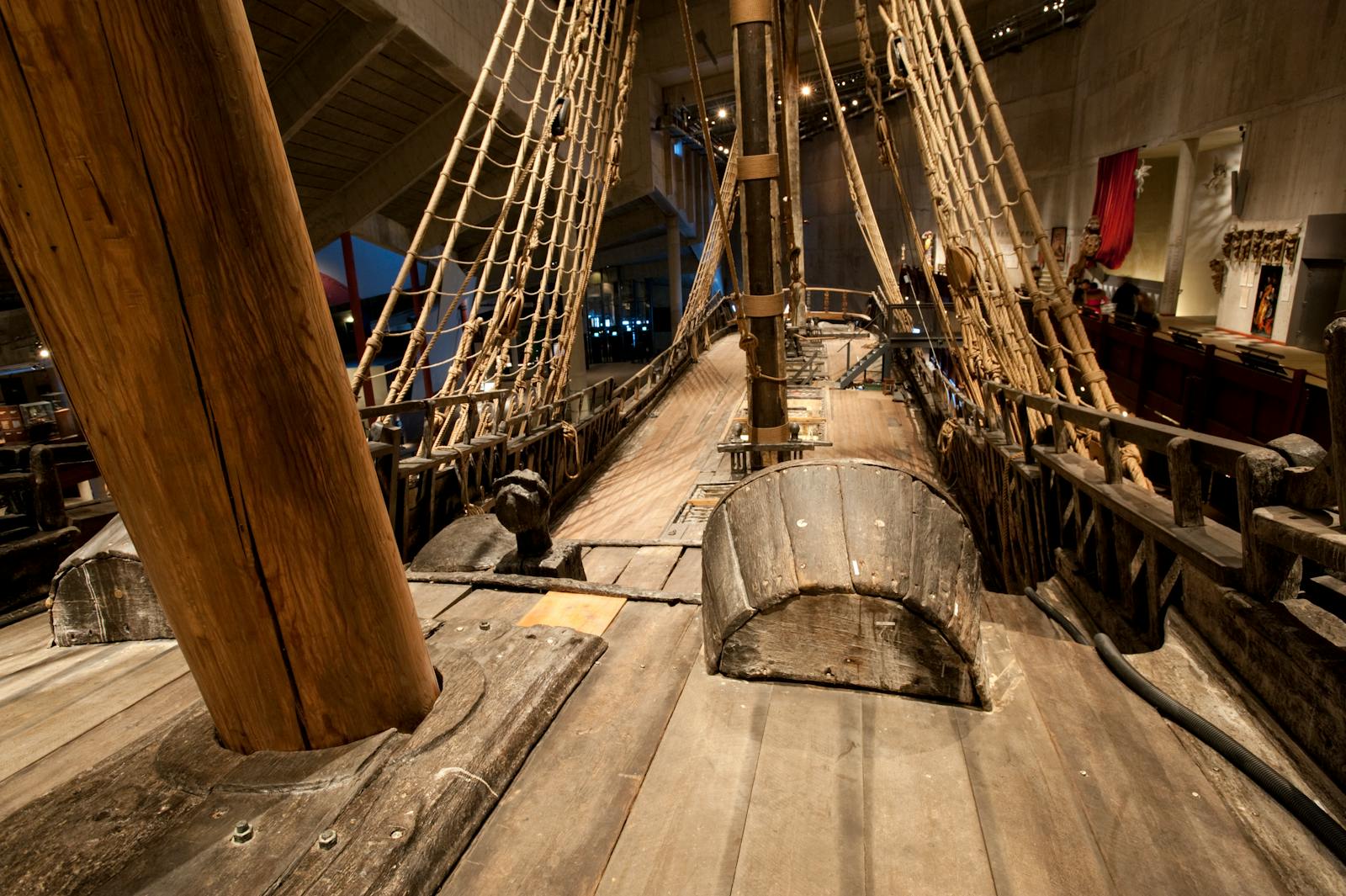
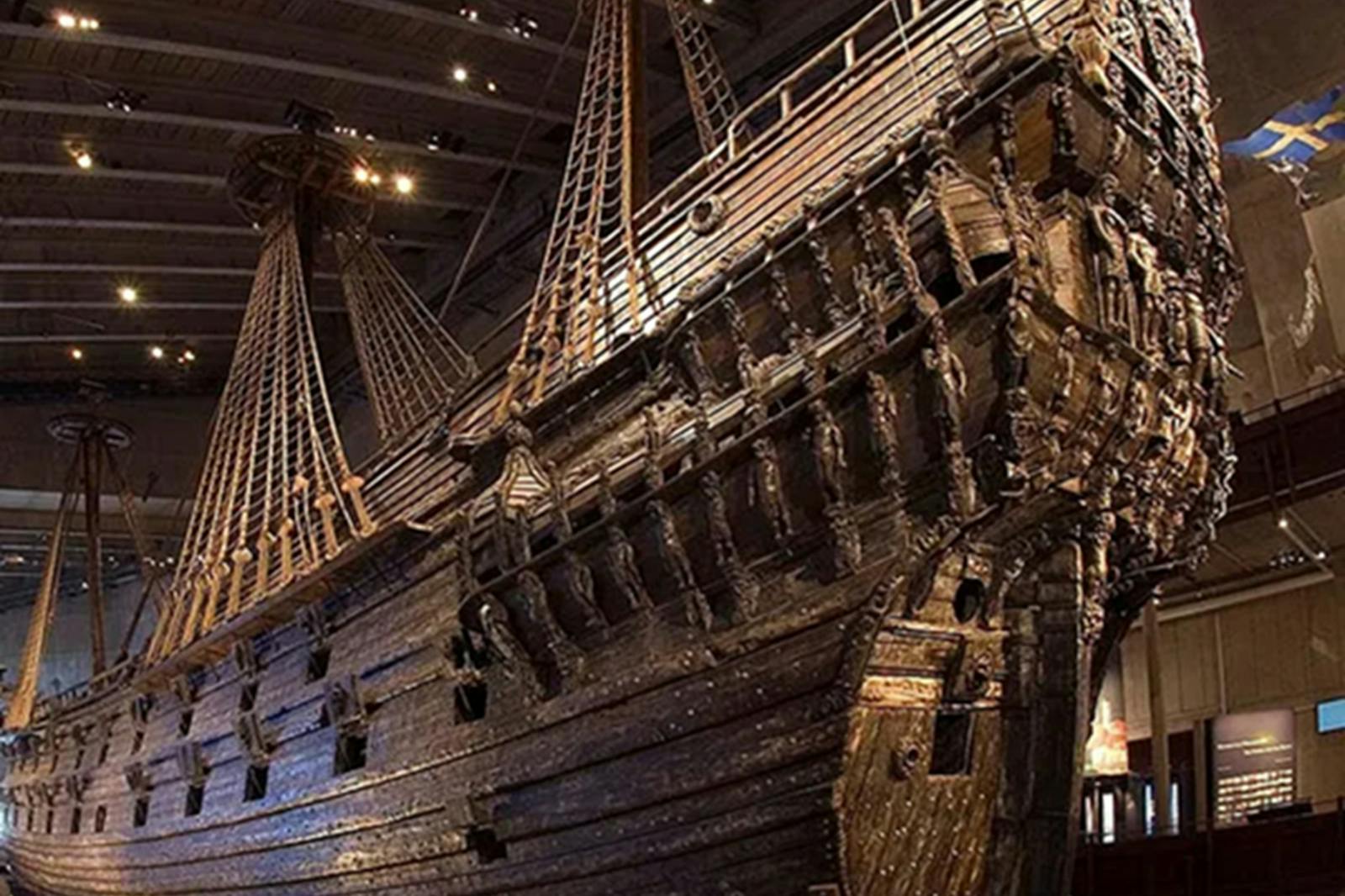
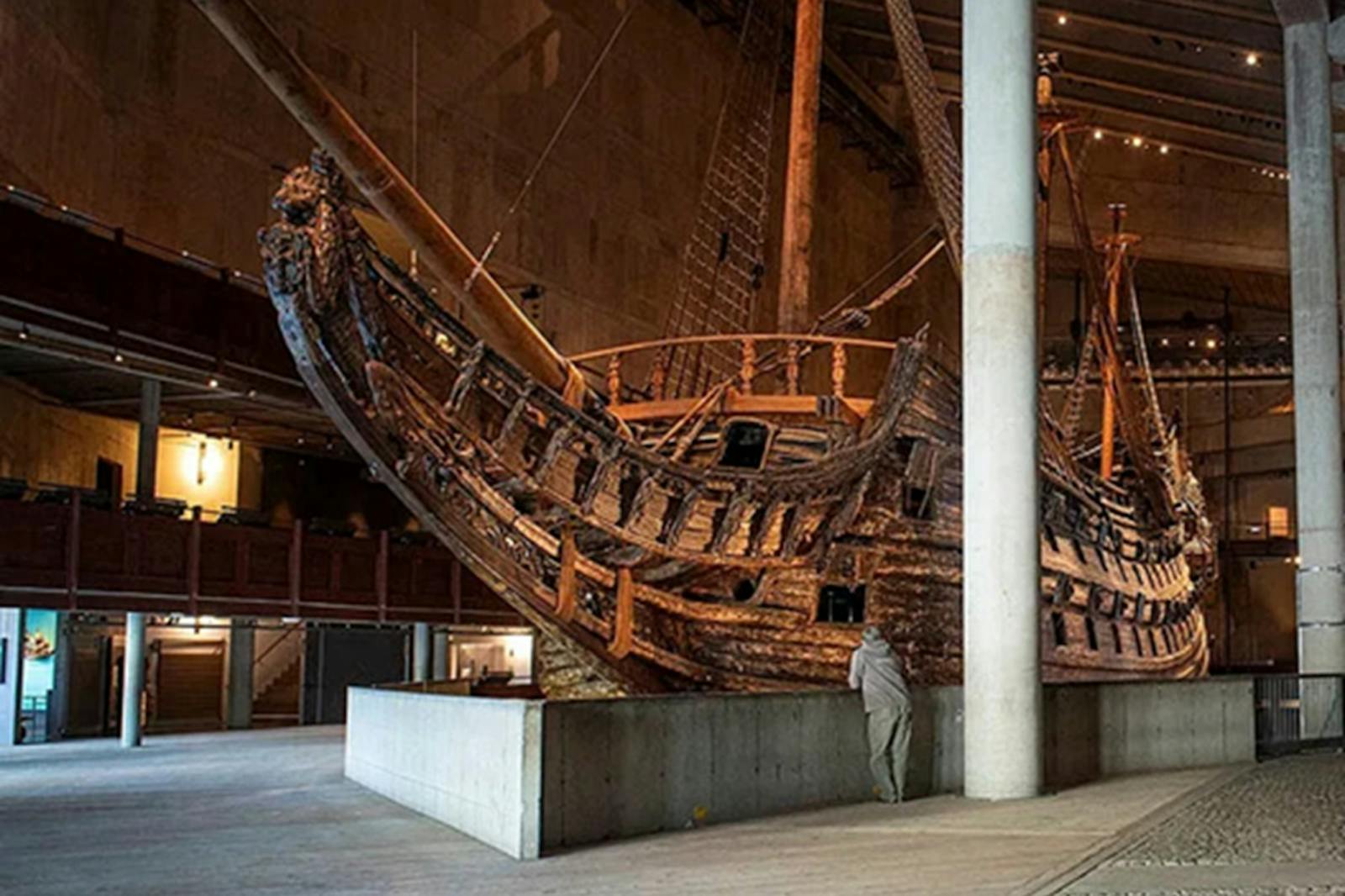
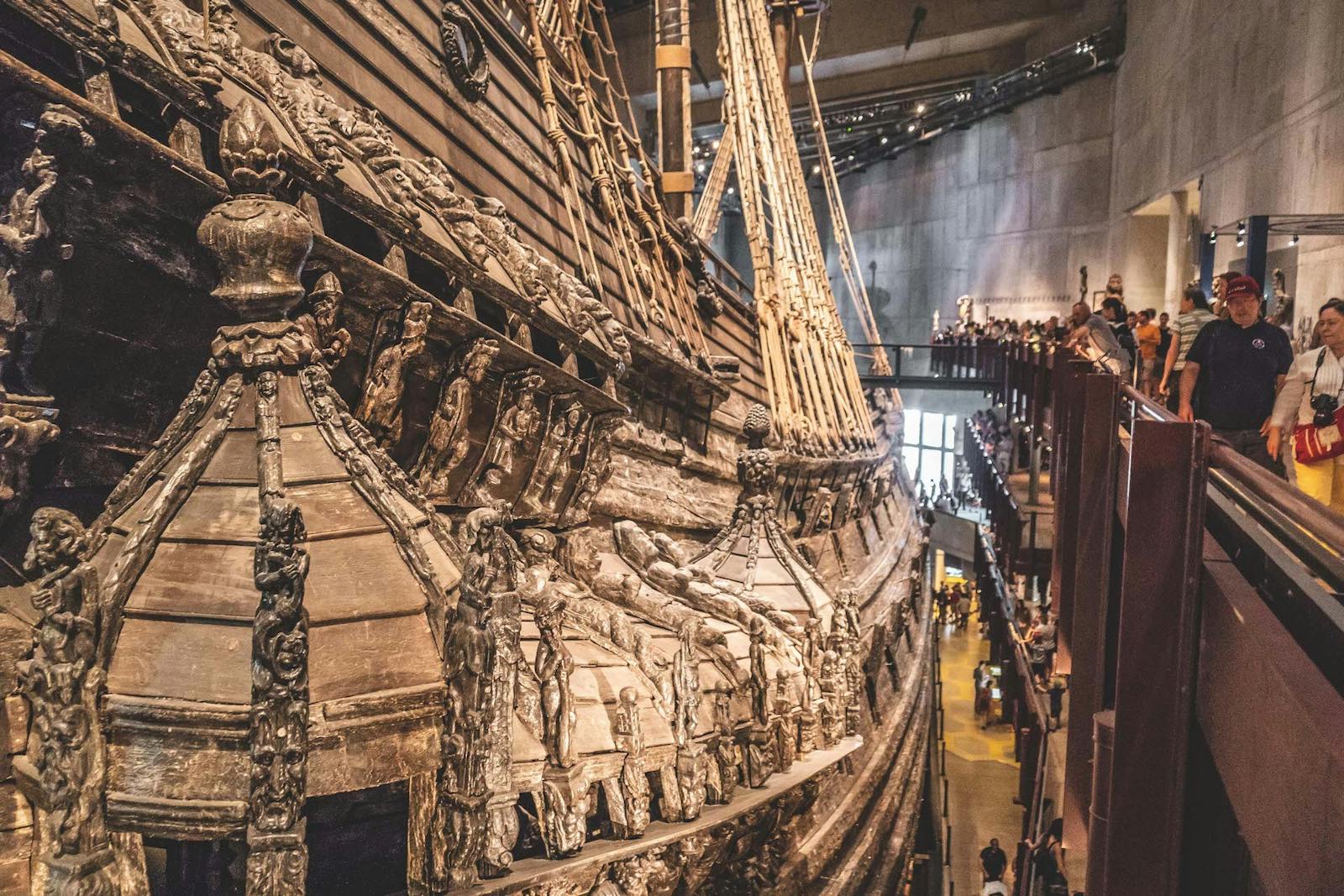
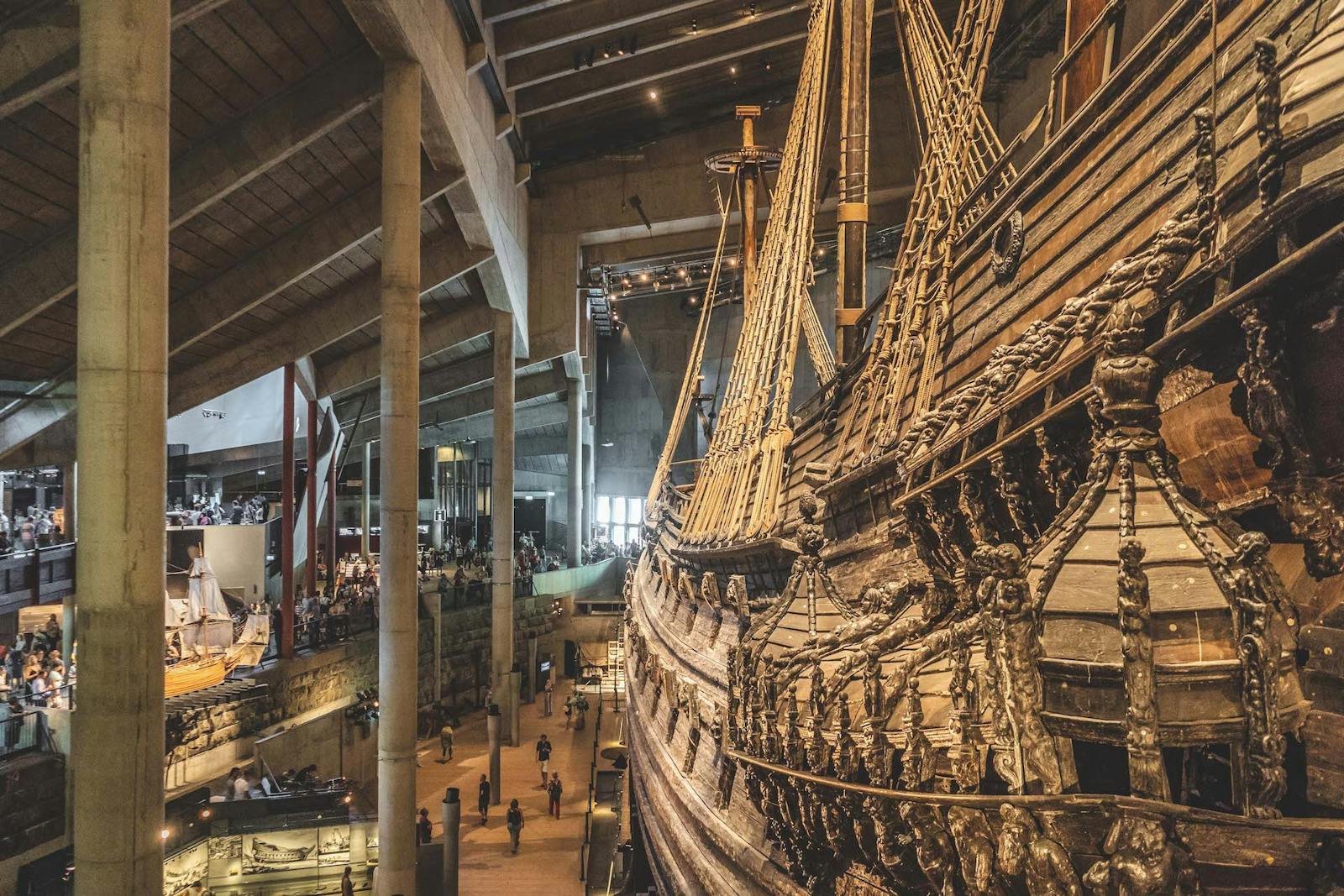
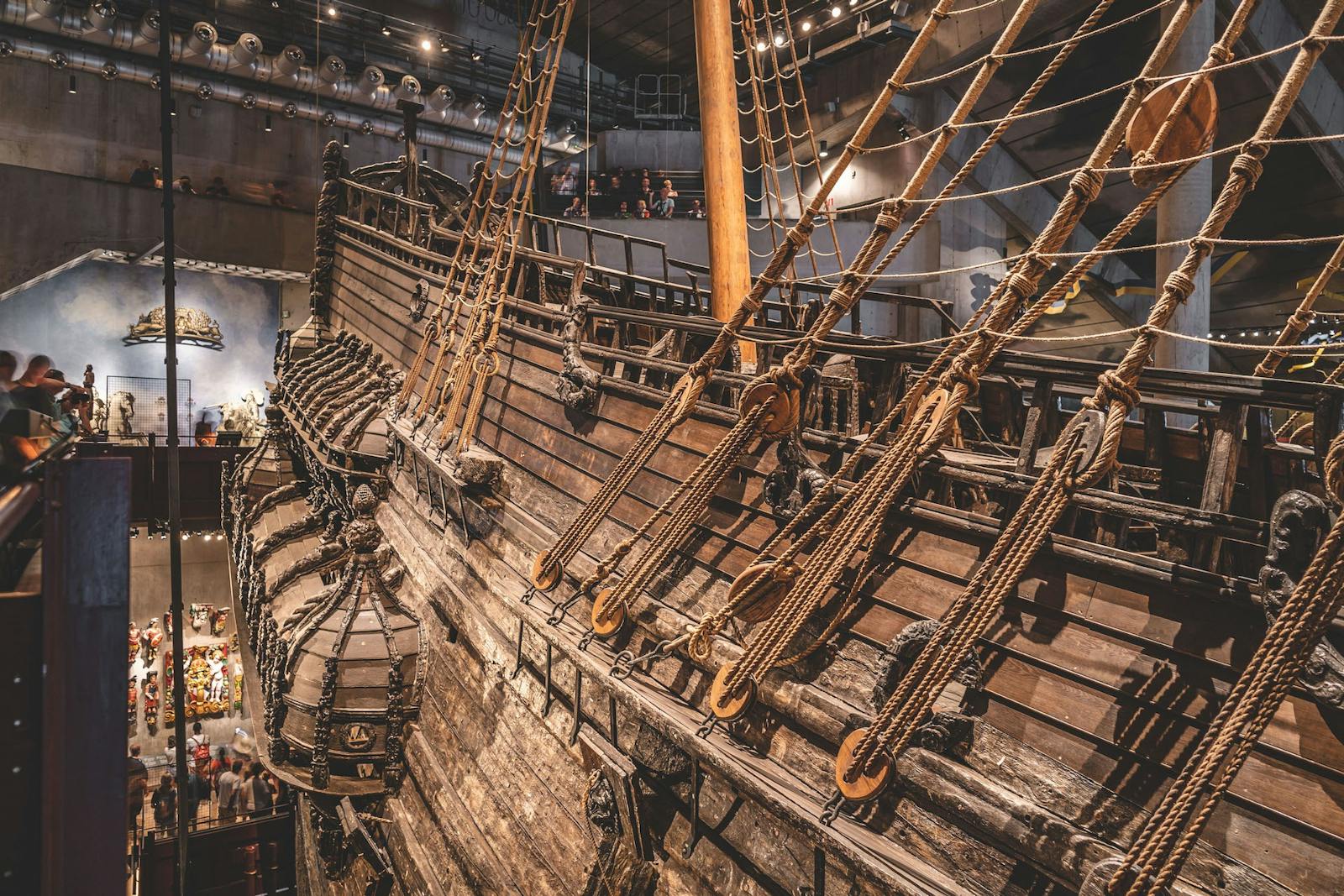
The heart of the museum is of course the Vasa ship itself, visible on six levels. Visitors can observe the keel, decks, sterncastle, and baroque sculptures. The original wood, blackened by three centuries of immersion, contrasts with the untreated replacement pieces. This visual difference helps understand the extent of conservation work carried out on the ship.
In addition to the Vasa, the museum presents four other floating museum ships: the Sankt Erik, the Finngrundet, the Spica, and the Bernhard Ingelsson. These ships, often overlooked by visitors, offer an interesting historical complement. They illustrate the evolution of the Swedish navy and different periods of the country's maritime history.
The annex exhibitions enrich the visit with models, artifacts, and reconstructions. Panels detail the historical context of Sweden in the 17th century, under the reign of Gustavus Adolphus. Visitors can also discover the tools of the carpenters and the construction techniques used at the time. These educational elements make the visit accessible and captivating for all ages.
Practicalities and conservation of the Vasa
The museum is located at Galärvarvsvägen 14 on the island of Djurgården. To preserve the wood, the indoor temperature is strictly maintained between 18 and 20°C. It is therefore advisable to bring a sweater, even in summer. This conservation measure is essential to guarantee the longevity of the ship and the exhibited artifacts. Air conditioning also maintains a stable humidity level around 50%.
Access to the museum is subject to strict rules regarding luggage. Large bags and wheeled bags are prohibited inside. Only small handbags or backpacks carried on the person are allowed. A cloakroom is available for visitors who do not comply with this instruction. This measure aims to protect the ship and exhibitions from any potential damage.
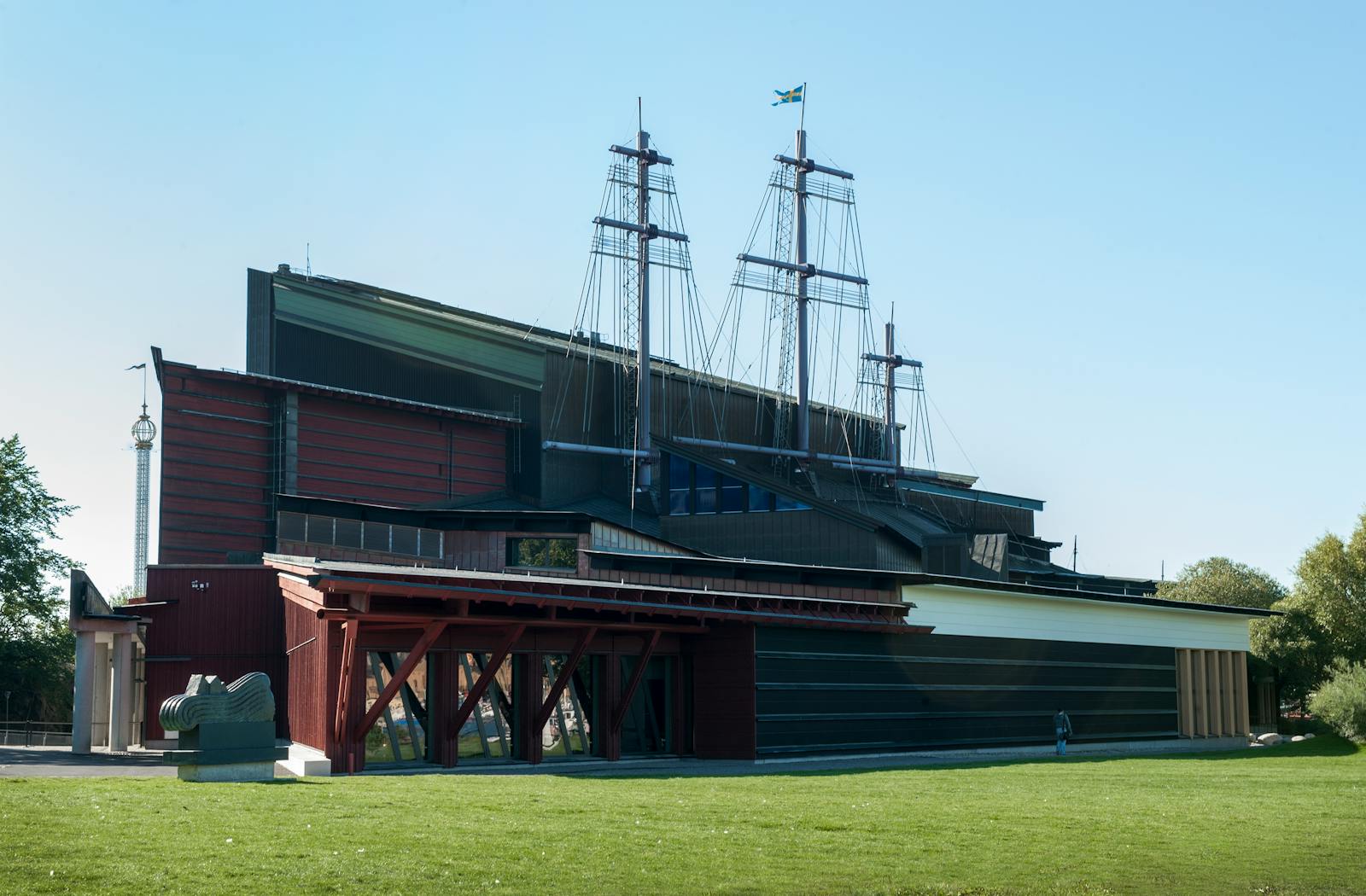
The museum building, designed by Marianne Dahlbäck and Göran Månsson, is an architectural work in itself. Its copper roof is topped with stylized masts representing the actual height of the fully rigged Vasa. Inaugurated on June 15, 1990, by Prince Bertil of Sweden, the museum has welcomed more than 25 million visitors. It remains a must-see destination for any visit to Stockholm.
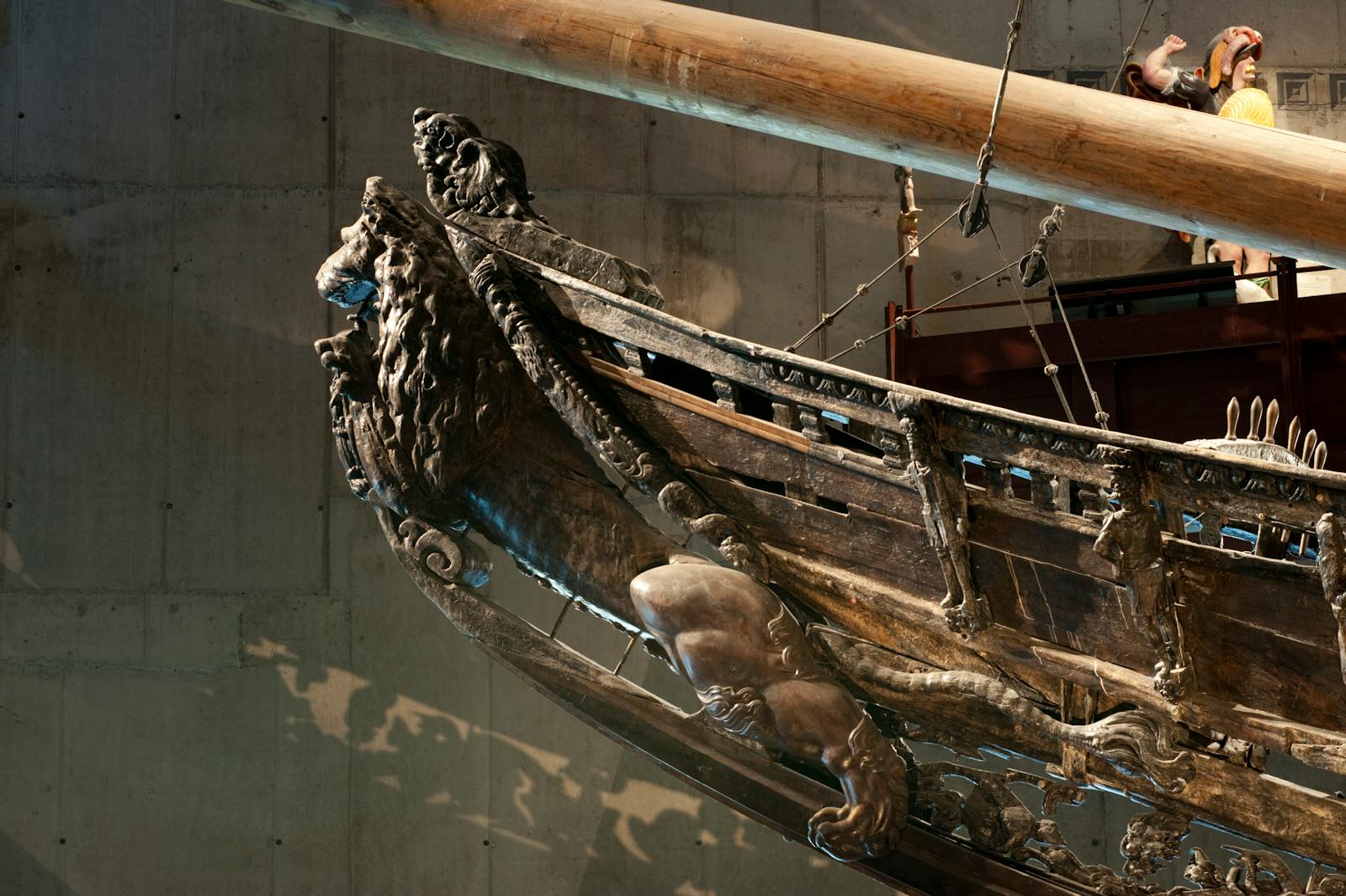
What to expect at the Vasa Museum
The best-preserved 17th-century ship
Tips for visiting the Vasa Museum
Insider tips
Arrive early for tranquility
As the most visited museum in Scandinavia, the early hours allow for a more serene contemplation of the ship. Arrive before 10am to avoid large groups and enjoy a calm, immersive visit, especially for photos.
Photograph without flash
Photography is allowed for private use, but avoid flash to prevent damage to sensitive artifacts. Use natural light streaming through the high windows for sharp shots. Respect the conservation guidelines for the historic ship.
Eat on-site or picnic
Yes, there is a restaurant at the Vasa museum, but check its hours on its website. The Vasa Museum Restaurant offers a view of the park, or bring a picnic to be consumed in the designated outdoor areas.
Explore the 6 levels
Don't just stick to the ground floor; the ship is visible from the keel to the sterncastle across 6 distinct levels. Climb the stairs to see the baroque sculptures and cannons up close. Explore each floor to grasp the scale of this maritime masterpiece.
Adapt the visit for children
The museum is suitable for children thanks to interactive exhibits and models. However, it is a serious historical museum, so adapt the approach according to age to maintain their interest during the two hours.
Book your tickets online
We recommend booking online to avoid queues, especially during peak season. Although on-site purchase is possible, it is risky in summer where lines can be very long. Book your tickets in advance to guarantee entry and save valuable time.
Use public transport
The tram or boat from the city center offers a picturesque approach to Djurgården, avoiding walking in summer. Allow 10 minutes by bike or 20 minutes on foot from Stockholm City. Opt for public transport for an easy and stress-free arrival.
Check opening hours
Check the Vasa Museum opening hours before your visit, as hours vary by season. Plan your arrival to coincide with opening time and maximize your visit time without stress. Check specific dates to avoid any unexpected closures.
Ready to book?
Choose your tickets online and check their conditions before booking.
Book my ticketsDid you know?
Little-known anecdotes
The inaugural sinking
The ship sank upon leaving the port during its maiden voyage in 1628. This tragedy occurred due to instability, although the precise details regarding the weight of the 64 cannons are not explicitly detailed in this source.
Titanic restoration
The ship spent 27 years in a temporary structure (Wasavarvet) treated with polyethylene glycol before the permanent museum. This complex chemical operation lasted from 1961 to 1988 to stabilize the wood.
Iconic architecture
The copper roof is topped with stylized masts representing the actual height of the fully rigged Vasa. This distinctive silhouette allows you to spot the museum from afar on the island of Djurgården, in the heart of the royal park.
Attendance record
More than 25 million people have seen the Vasa since the museum opened in 1990. It remains today the most visited museum in all of Scandinavia according to official figures.
Architectural competition
384 architects submitted plans for the permanent building, won by Marianne Dahlbäck and Göran Månsson in 1981. Their modern design intentionally contrasts with the ancient history of the ship.
Construction site visit
228,000 visitors were able to see the half-finished museum in summer 1989 before the official inauguration. This popular curiosity shows the immense Swedish interest in this maritime heritage.
Include the Vasa Museum in your Stockholm trip
Three itineraries based on available time
Quick maritime immersion
- 10:00 AM : Arrival at the Vasa Museum, tour of the ship and main exhibitions
- 12:00 PM : Lunch at the Vasa Museum Restaurant or picnic on Djurgården
- 1:00 PM : Quick visit to other floating museum ships
- 2:30 PM : Relaxing walk in the adjacent park before heading back
Day of culture and nature on Djurgården
- 10:00 AM : Complete tour of the Vasa Museum (1.5-2 hours)
- 12:30 PM : Lunch on the island of Djurgården among numerous restaurants
- 2:00 PM : Visit the Stockholm Maritime Museum (Maritima) nearby
- 4:00 PM : Walk in Djurgården Park or visit Skansen
- 6:00 PM : Return to the city center by boat from the marina
Stockholm Weekend: History and Modernity
- Day 1 : Morning at the Vasa Museum, afternoon in Gamla Stan (Old Town Stockholm)
- Day 2 : Morning at the Nobel Museum or ABBA Museum, afternoon at the Maritime Museum
- Evening : Dinner in the trendy Södermalm district
- Option : If not visited, second guided tour of the Vasa in the evening
Go City: Stockholm All-Inclusive Pass

Save up to 50%* on unlimited entry to over 50 Stockholm attractions and tours with Go City.
From 88,05 €
See also
More must-see experiences in Stockholm
Interactive map
Find the attraction and nearby places to visit
Near Vasa Museum
Make time to explore the surrounding area
Maritime Museum (Maritima)
5 min walk
Discover the complete Swedish maritime history, from Vikings to modern ships, in a museum complementary to the Vasa.
Djurgården Park
2 min walk
Vast royal park offering walking trails, botanical gardens, and an unobstructed view of Lake Mälaren.
Skansen (Open-air museum)
15 min walk
Europe's largest open-air museum, reconstructing Swedish rural life through authentic historical buildings.
Vasa Museum Restaurant
0 min walk
Restaurant located directly within the museum, offering views of the ship and modern Swedish cuisine for lunch.
Vasa Pier
1 min walk
Departure point for tourist boats to the city center, offering a unique perspective of the museum from the water.
Tomb of Gustavus Adolphus
10 min walk
Historical monument located in Stockholm Cathedral, commemorating King Gustavus Adolphus for whom the Vasa ship was built.
How to get to the Vasa Museum
Estimated travel times from the main points in the city
Bus : Strandvägen (7 min walk)
- From Eskilstuna/Kjula 78,7 km → 195 min
- From Tekniska högskolan 2,3 km → 12 min
- From Stockholms östra 2,4 km → 12 min
- From Saltsjö-Järla 4,0 km → 16 min
- From Lillängen 4,7 km → 17 min
- From Eskilstuna/Kjula 78,7 km → 323 min
- From Tekniska högskolan 2,3 km → 17 min
- From Stockholms östra 2,4 km → 17 min
- From Saltsjö-Järla 4,0 km → 24 min
- From Lillängen 4,7 km → 27 min
- From Eskilstuna/Kjula 78,7 km → 265 min
- From Tekniska högskolan 2,3 km → 11 min
- From Stockholms östra 2,4 km → 11 min
- From Saltsjö-Järla 4,0 km → 16 min
- From Lillängen 4,7 km → 19 min
- From Eskilstuna/Kjula 78,7 km → 365 min
- From Tekniska högskolan 2,3 km → 13 min
- From Stockholms östra 2,4 km → 13 min
- From Saltsjö-Järla 4,0 km → 21 min
- From Lillängen 4,7 km → 24 min
- From Tekniska högskolan 2,3 km → 29 min
- From Stockholms östra 2,4 km → 30 min
Accommodation
Find a hotel near Vasa Museum
When should you visit Vasa Museum?
Expected crowds by day - click a date to book
Frequently asked questions
Everything you need to know before your visit
Booking
Visit
Practical Info
Accessibility
Vasa Museum on video
A preview of this exceptional place before your visit
Vasa Museum in pictures
See what to expect during your visit










Vasa Museum vs other maritime museums
Quick comparison with other major sites
| Vasa Museum | Maritime Museum (Maritima) | Skansen | |
|---|---|---|---|
| Year of creation | 1990 | 1989 | 1891 |
| Adult rate | 28,75€ | 15,00€ | 25,00€ |
| Visit duration | 1h30-2h | 1h-1h30 | 3h-4h |
| Special feature | Intact 17th-century ship | General Swedish naval history | Open-air museum and zoo |
Ready to book?
Choose your tickets online and check their conditions before booking.
Book my tickets